

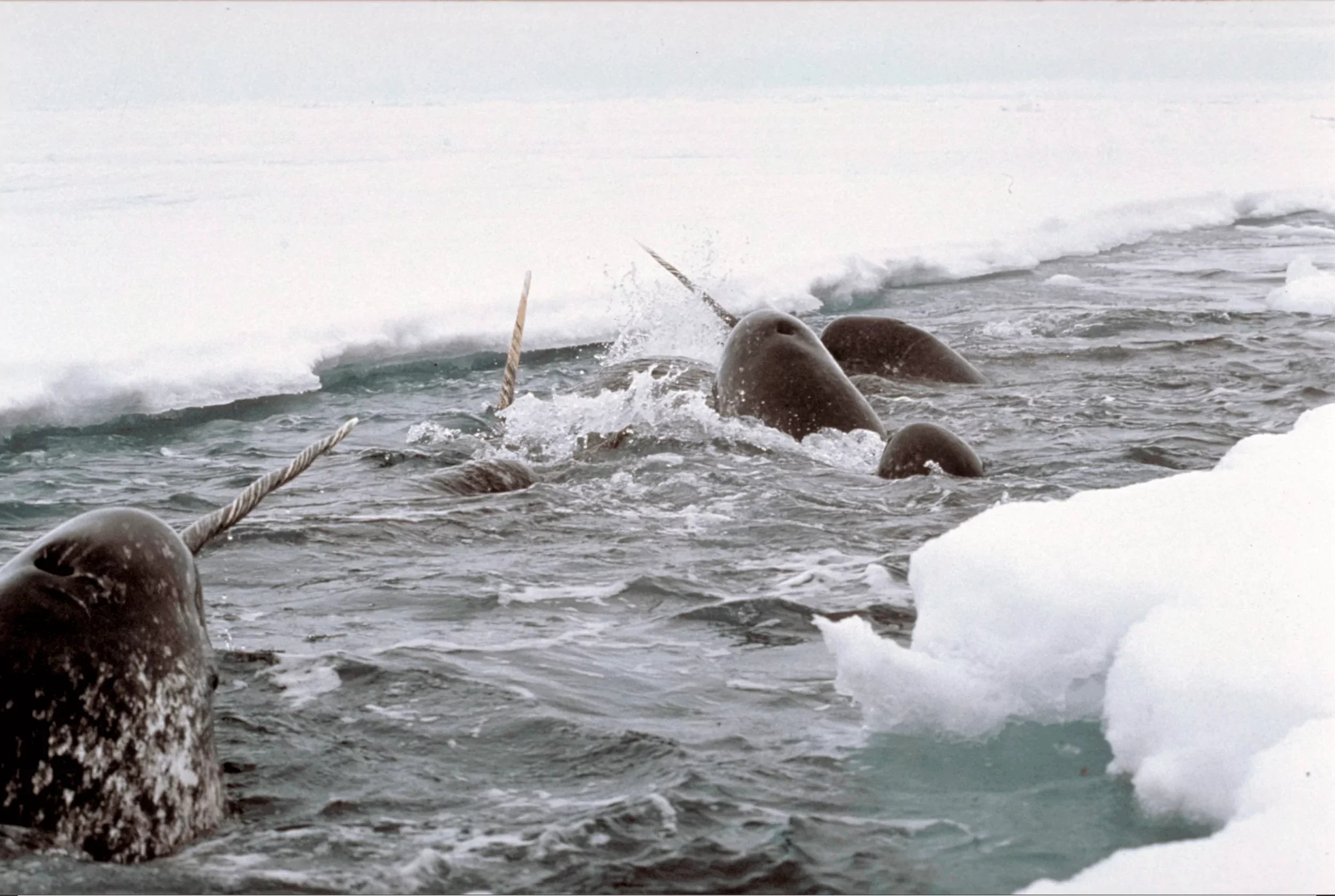
The Narwhal
Extraordinary Unicorn of the Sea
This site reflects decades of fieldwork and scientific study, including research led by Dr. Martin Nweeia in collaboration with Inuit communities and fellow researchers.
Narwhal
/”narwel/ - nar-whal noun
Scientific Name: Monodon monoceros- Narwhals are part of the cetacean family, including dolphins, porpoises, and whales. They are medium-sized whales living in the Arctic's icy waters, primarily around Greenland, Canada, and Russia.
Narwhals By The Numbers

-
Males can be up to 16 feet, while females are slightly smaller.
-
Narwhals can weigh anywhere from 1,800 lbs up to 3,500 lbs!
-
Narwhals can live upwards of 50 years!
-
Narwhal tusks can grow up to 10 feet or 3 meters long.
Although myths and legends have surrounded narwhals, scientists like Dr. Martin Nweeia have uncovered facts about narwhals that make these animals even more incredible.
Get to know the mysterious creatures that have fascinated humans for centuries. These marine mammals inhabit the cold Arctic waters with their distinctive long tusks.
The information throughout Narwhal.org is informed by ongoing field research and decades of collaboration with Inuit communities, helping advance scientific understanding of narwhal biology and behavior.

The Extraordinary Narwhal Tusk
The most recognizable feature of the narwhal is the tusk that spirals counterclockwise out from the left side of the head of males (and some females). This tusk can grow up to 10 feet (3 meters) long! But what exactly is this impressive feature, and why do narwhals have it?
The tusk is actually an elongated tooth, which is usually found on the left side of the narwhal’s upper jaw. Male narwhals are more likely to have the tusk, though some males do not, and about 15% of females also grow one. In rare cases, male narwhals can have two tusks.

A Connecticut Dentist’s Fascination with the Narwhal Tusk Transformed Him into a Narwhal Expert
When faced with the decision “...Are you going to become an anthropologist? Or a dentist?” Nweeia didn’t understand why he couldn’t do both.

Exploring the Inuit Way of Knowing
Inuit Qaujimajatugangit (IQ) described as "the Inuit way of knowing" and Isuma “wisdom,” and science are two methods of observing and understanding the natural and physical world.
Narwhal Conservation and Threats
As the Arctic ice melts due to rising temperatures, narwhals lose their habitat and face increased risks from predators, such as orcas, and human activities like shipping, oil exploration and pollution.
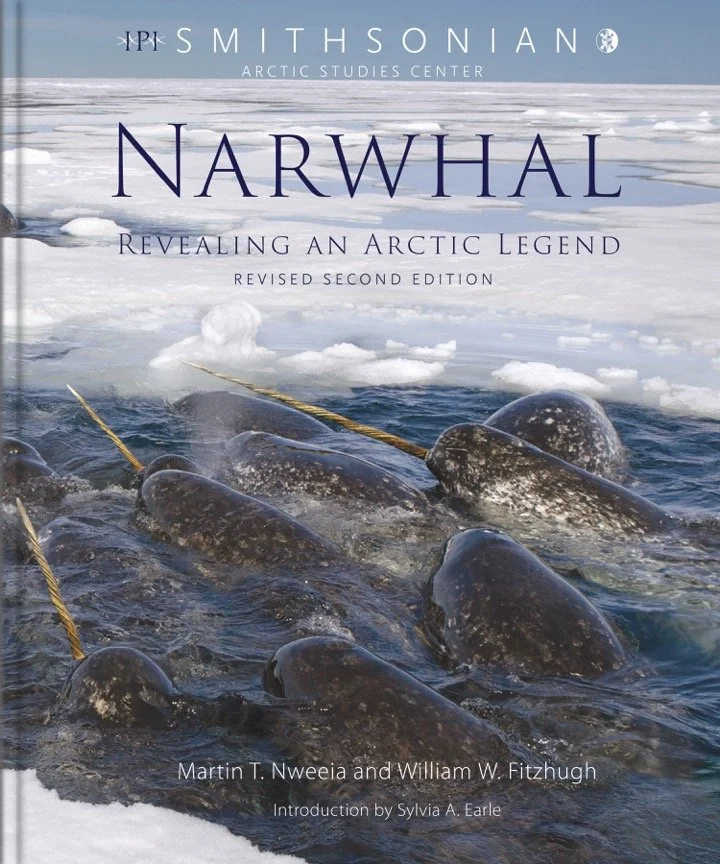
Discover the newly revised second edition of Narwhal: Revealing an Arctic Legend, the 504-page companion to the Smithsonian traveling exhibition.
Edited by Dr. Martin T. Nweeia and William W. Fitzhugh, this landmark volume brings together scientific discovery, Inuit cultural knowledge, history, and remarkable imagery to illuminate one of the Arctic’s most legendary—and least understood—animals.
With an introduction by renowned oceanographer and National Geographic Explorer at Large Dr. Sylvia A. Earle.
The Definitive Book on the Narwhal

Six Facts About Narwhals
Narwhal Research
-

Biology and Cultural Importance of the Narwhal
- Annual Review of Animal Biosciences 2024
-

Sensory Ability in the Narwhal Tooth Organ System
- American Association of Anatomy
March, 2014.
-
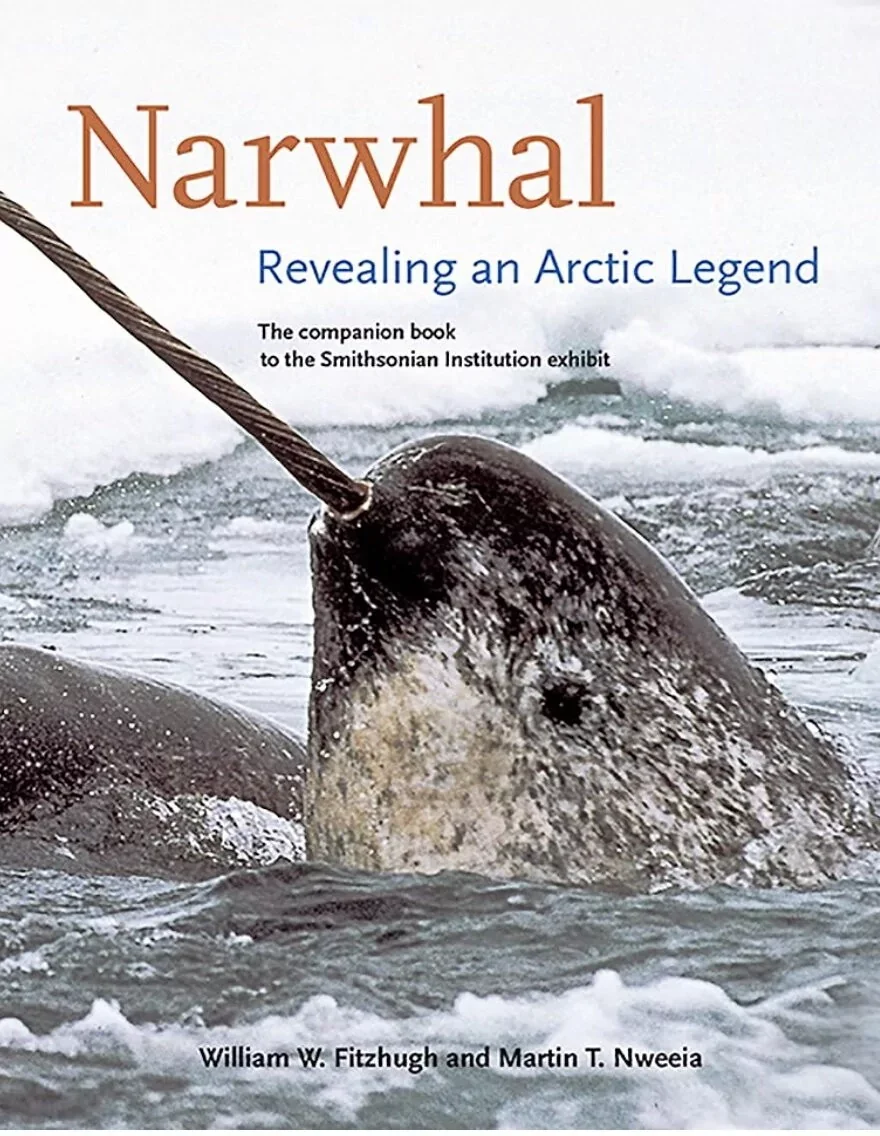
Integrating Inuit Knowledge with Science in a Discussion of Narwhal Population Dynamics, Behavior, and Biology
Smithsonian Institution
December, 2017.
-

Isumaqatigingniq: Building a Transformational Science Education Model
Journal of Arctic Institute of North America
2021
If You Are New to Narwhals
5
6
Do narwhals still exist?
1
Yes. Narwhals still live in Arctic waters near Canada, Greenland, and Russia. While not currently endangered, they are vulnerable to climate change, sea ice loss, and increasing human activity in the Arctic.
Learn more about narwhal migration patterns and long-term survival.
Why can’t narwhals live in aquariums?
2
Narwhals are highly specialized Arctic whales that depend on sea ice, deep diving, and natural acoustic environments. Aquariums cannot replicate the conditions narwhals need to feed, navigate, and survive.
Read more about why narwhals can’t live in aquariums.
What is a narwhal’s horn for?
3
The narwhal’s “horn” is actually a tusk—a long tooth filled with nerve endings. Research suggests it plays a sensory role that helps narwhals detect changes in their environment.
Explore the science behind the narwhal tusk.
Where do narwhals live?
4
Narwhals live year-round in Arctic waters, spending much of their lives beneath sea ice and surfacing through cracks and openings to breathe.
See how Arctic conditions shape narwhal habitat and behavior..
Narwhals are generally shy and avoid humans. Encounters are rare and usually occur in remote Arctic regions where human activity is limited.
Learn how human noise affects narwhal behavior..
Are narwhals friendly to humans?
Narwhals feed primarily on deep-water fish such as Greenland halibut and Arctic cod, along with squid and shrimp. They hunt beneath Arctic sea ice and can dive thousands of feet in search of food.
Learn more about what narwhals eat.